
William & Mary Launches New Bioengineering Degrees
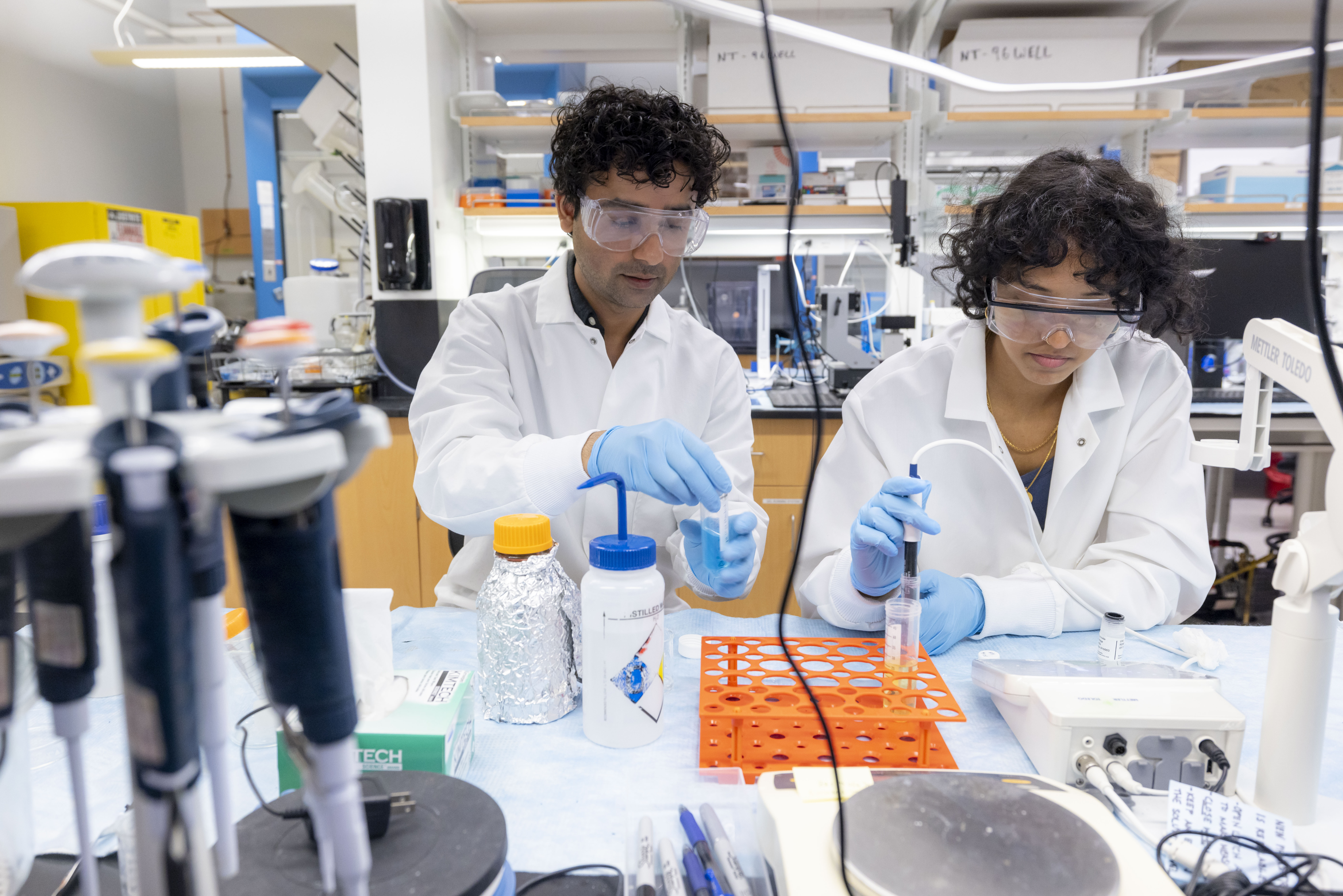
The world's most formidable challenges rarely fit neatly into a single discipline. Developing new medicines, creating sustainable materials, restoring damaged ecosystems and advancing biotechnology all require experts who can think simultaneously like scientists, engineers and innovators.
For more than 330 years, William & Mary has prepared students to approach complex problems from multiple perspectives. That tradition continues today through interdisciplinary programs that combine the liberal arts and sciences with emerging fields that prepare graduates for tomorrow's challenges.
Building on that foundation, William & Mary is launching new Bachelor of Arts and Bachelor of Science degrees in Bioengineering in fall 2027 through the School of Computing, Data Sciences & Physics, giving students new pathways into one of science and engineering's fastest-growing fields.
"Our bioengineering degrees will be distinctive in their approach, drawing from the strengths that define a William & Mary education — small class sizes, an interdisciplinary culture and expertise in the sciences, computation and applied research," said Provost Peggy Agouris. "This approach instills powerful capabilities in our graduates, including quantitative reasoning, experimentation and the ability to solve difficult problems."
Engineering Solutions Inspired by Biology
Bioengineering applies engineering principles to living systems across medicine, biotechnology, agriculture, environmental sustainability and advanced materials. Students learn to combine biology, engineering, chemistry, physics and computation to understand living systems and design new biological solutions to a range of real-world problems.
“Some of the most important questions of the coming decades sit at the intersection of computation, biology, and engineering,” said Doug Schmidt, dean of the School of Computing, Data Sciences & Physics. “This program prepares students to tackle those challenges by combining scientific discovery with engineering innovation. Bioengineering represents exactly the kind of interdisciplinary education our school was created to advance.”
That interdisciplinary approach also positions graduates for careers in one of the fastest-growing innovation sectors. Across Virginia, investments in pharmaceuticals, biotechnology, advanced manufacturing and environmental remediation are creating growing demand for engineers with expertise in biological systems. Bioengineers are helping develop next-generation medicines, manufacture sustainable materials, improve wastewater treatment, produce clean fuels and create technologies that support health care, conservation and national security.
“The bioengineering industry in Virginia is burgeoning,” said Christopher Del Negro, the vice dean for undergraduate programs for the School of Computing, Data Sciences & Physics. “These companies need engineers with deep training in both biomolecular and biomaterials fields for their operations and particularly to move up and become leaders.”
Multiple Degree Pathways
While all bioengineering students share a common foundation, the program offers different pathways designed around career goals.
The Bachelor of Science is designed for students pursuing careers as practicing bioengineers or planning graduate study in engineering. In addition to the core curriculum, students will complete one of two concentrations – Biomaterials or Biomolecular Engineering – that provide specialized preparation for engineering careers.
Students in the Biomaterials concentration will learn to design and develop materials that interact with or mimic biological systems, including the creation of polymers, composites and hybrid materials with specific mechanical, chemical and biological properties. Graduates of this concentration will be able to address challenges pertaining to biodegradability, biocompatibility and functional material design for various applications.
Students pursuing the Biomolecular Engineering concentration will learn to design biological molecules and systems—including DNA, RNA and proteins—to solve real-world challenges. Applications range from developing targeted therapeutics and next-generation "smart drugs" to cleaning polluted environments, improving agricultural production and creating more sustainable manufacturing processes.
The Bachelor of Arts in Bioengineering, the first of its kind in Virginia, provides greater flexibility for students whose ambitions extend beyond traditional engineering roles or are interested in pursuing double majors or professional degrees. This can include students that intend to pursue medical school or who plan to work in government policy, compliance, intellectual property or other fields where a background in engineering is useful. It also serves students who may wish to become bioengineers but specialize in emerging areas, such as the application of machine learning and AI to bioengineering problems by pursuing double majors in relevant fields.
“One of the greatest strengths of a bioengineering degree is its flexibility,” said Margaret Saha, Chancellor Professor of Applied Science. “Bioengineering teaches students how to solve problems, and because the field is inherently multidisciplinary and the technology is evolving rapidly, bioengineering graduates are exceptionally well prepared not only for today's jobs, but for careers that may not even exist yet.”
Distinct from large engineering schools, William & Mary’s Bioengineering program emphasizes small classes, close faculty mentorship and hands-on learning embedded throughout the curriculum.
“Hands-on, experiential learning is at the heart of our program,” said Saha. “Our goal is for students to graduate having not only learned bioengineering — but having actually practiced it.”
Students complete a sequence of engineering design courses that progressively build skills in laboratory methods, instrumentation, quantitative analysis and teamwork before culminating in a yearlong collaborative capstone project. Beyond the classroom, students can conduct research alongside faculty mentors or participate in William & Mary's International Genetically Engineered Machines (iGEM) team.
“Our program features hands-on applied learning every semester of every year of the program,” said Del Negro. “More than half of the core curriculum courses feature hands-on laboratories, and we are looking for partnerships in industry for additional applied learning opportunities for our students.”
Bioengineering Not New for W&M
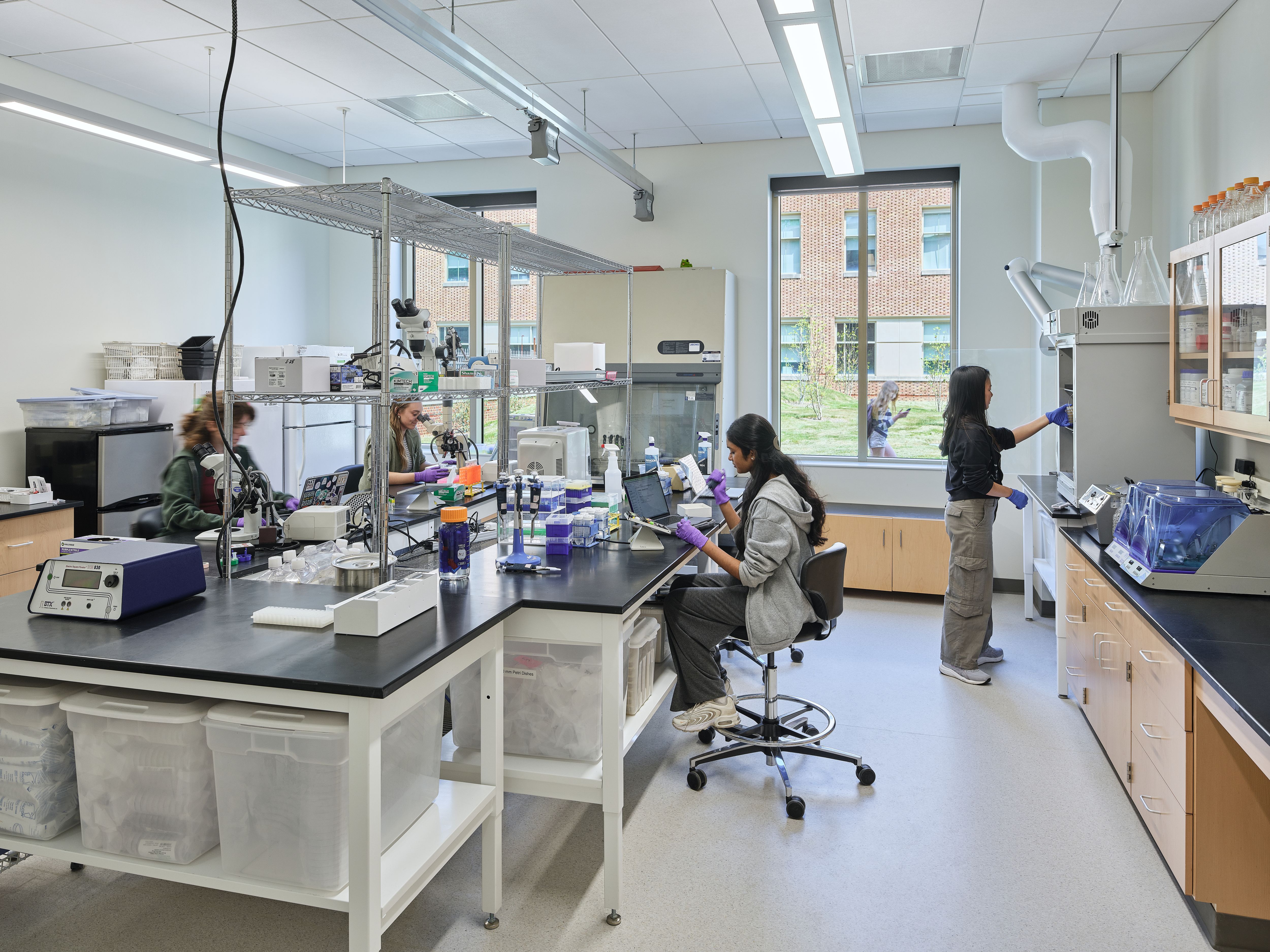
The new degrees build on strengths William & Mary has been cultivating for years.
“While the degree programs are new, bioengineering at William & Mary certainly is not,” stated Saha. “For years William & Mary faculty have incorporated engineering design, quantitative problem-solving, and a build-to-learn philosophy throughout the sciences.”
Long before a formal degree existed, William & Mary students pursued bioengineering through undergraduate research, engineering coursework, self-designed interdisciplinary majors and the internationally recognized iGEM competition. For more than a decade, iGEM students have designed biology-based technologies to address real-world problems while competing against hundreds of universities from around the world.
“The new Bioengineering program simply brings these strengths together into a coherent, intentional curriculum that provides students with a clear pathway into one of today's fastest-growing fields,” said Saha.
She also praised the students whose enthusiasm for biomolecular engineering and synthetic biology helped demonstrate the need for a formal program.
“Their enthusiasm, creativity, and willingness to build something new helped demonstrate that there was tremendous demand for this program,” said Saha. “Our students continue to inspire us. They are curious, creative, collaborative, and eager to tackle meaningful problems through hands-on learning. They don't simply want to study science—they want to build solutions that improve people's lives.”
Click here to learn more about the new Bioengineering program at William & Mary.
Editor’s Note: William & Mary is committed to preparing students for data-rich environments and an AI-driven world through thoughtful leadership and human-centered innovation. This vision is taking shape in the new School of Computing, Data Sciences & Physics (CDSP) in collaboration with the entire campus. CDSP integrates AI tools into daily work, including news writing. The CDSP communications team used OpenAI’s ChatGPT to assist in building this article. The team then reviewed and edited the article before publication.