
From honors thesis to NSF grant: W&M researchers explore the science of brain connections
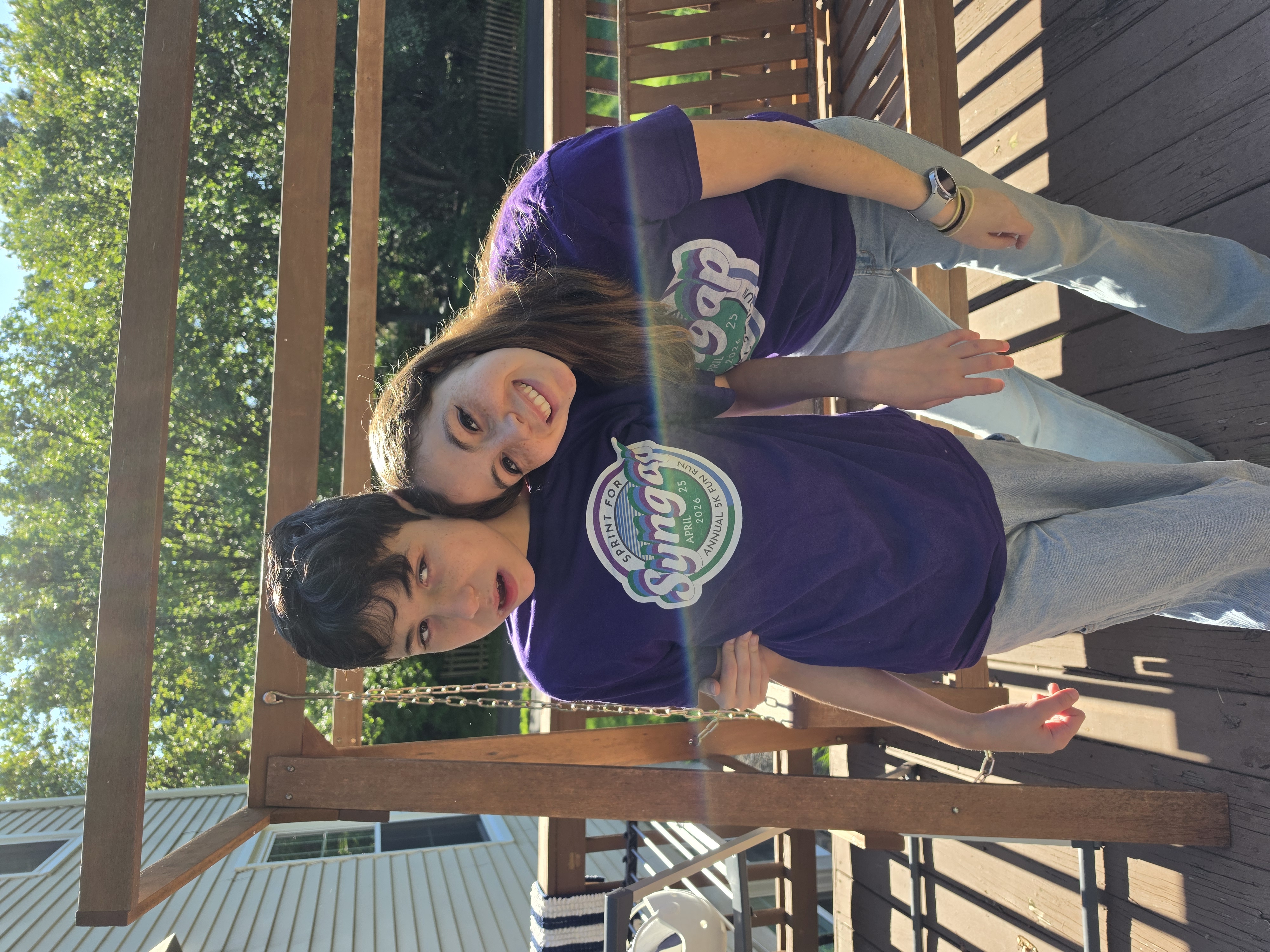 For William & Mary doctoral student Sarah Sakly, the motivation behind her research is deeply personal.
Her younger brother has a rare genetic disorder associated with mutations in the SYNGAP1 gene, which plays an important role in how brain cells communicate. As a junior at William & Mary, Sakly wanted to learn more about the disorder and approached Greg Conradi Smith, a professor of applied science, about pursuing the topic for her undergraduate honors thesis.
What began as an independent research project has since grown into an interdisciplinary collaboration supported by a $250,000 grant from the National Science Foundation.
“The thesis was great, but there was so much more we could have explored,” said Sakly, now a Ph.D. candidate in applied science, explaining her decision to continue her education at William & Mary.
The project now brings together Sakly, Conradi Smith and Jennifer Bestman, director of William & Mary's neuroscience program and professor of biology, to investigate how proteins interact at the connections between brain cells and what happens when those interactions are disrupted.
Their work illustrates how collaboration across academic disciplines can help researchers tackle complex biological questions, while laying the groundwork for future advances in understanding neurological disorders.
Understanding How Brain Cells Communicate
The project focuses on the microscopic structures that help brain cells communicate. Brain cells exchange information through connections called synapses, which Conradi Smith described as “the junctions between brain cells where communication is occurring in various pathways in the brain.”
At the receiving end of a synapse is a specialized structure called the postsynaptic density, a tightly organized collection of proteins that helps the cell receive and respond to signals.
Two of those proteins, SynGAP and PSD-95, are central to the team's research. Their interactions help organize the postsynaptic density, and disruptions to that process may affect how synapses develop and function.
Mutations in the SYNGAP1 gene can cause the body to produce insufficient amounts of functional SynGAP protein, a condition known as haploinsufficiency.
“A lot of the disorder comes with epilepsy, with autism, with intellectual deficits,” Sakly said. “My little brother has SYNGAP1, which is kind of what got me started.”
The researchers are investigating how SynGAP and PSD-95 interact to form and maintain a protein-rich structure known as a condensate. Unlike structures enclosed by a membrane, these condensates form through interactions among molecules, allowing proteins to organize into concentrated clusters within cells.
“We're looking at the interactions between two proteins, SynGAP and PSD-95, and how their interactions might be helping this condensate form, disperse, and how the mutation might be affecting it,” said Sakly.
Understanding these interactions could provide new insights into how synapses develop, remain stable and respond to changes in the proteins that support them.
Using Mathematics to Guide Biological Discovery
Rather than relying on laboratory experiments alone, the team is combining mathematical modeling with experimental neuroscience to investigate the complex interactions between SynGAP and PSD-95.
Conradi Smith and Sakly are developing mathematical models to predict the conditions under which the two proteins assemble into condensates. Their work examines factors such as protein concentration, binding strength and changes to the proteins themselves.
These predictions will help identify which conditions are most important to investigate experimentally, narrowing a vast range of possibilities into a manageable set of questions.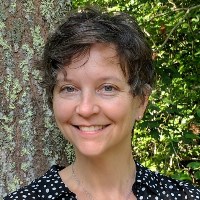 “We just physically can't do all of those experiments in the lab – it would take too much time and we wouldn't progress very far,” said Bestman. “So if math can help us narrow down these predictions to something that is really going to be useful for giving us insight into how synapses form, that's one side of it.”
Bestman's laboratory will test the mathematical predictions using tadpoles, whose transparent bodies allow researchers to observe individual neurons as they develop.
The researchers can also alter SynGAP within a single neuron while leaving surrounding brain cells unchanged. This approach allows them to isolate the effects of the protein on synapse formation and stability.
“Because everything else in the brain is completely normal, we can really focus on how modifying this one protein changes the way synapses form and how stable they are,” explained Bestman.
By comparing their experimental observations with the mathematical predictions, the researchers hope to develop a more complete understanding of how the postsynaptic density forms and what happens when its underlying protein interactions are disrupted.
Although the research may eventually contribute to a better understanding of SYNGAP1-related disorders, the team's immediate focus is on uncovering the fundamental biological processes that govern synapse formation.
"We are basic scientists interested in the physical biology of specialized cellular domains like the postsynaptic density," Conradi Smith said. “But we are hopeful that our work will support biomedical research.”
Connecting Research with Families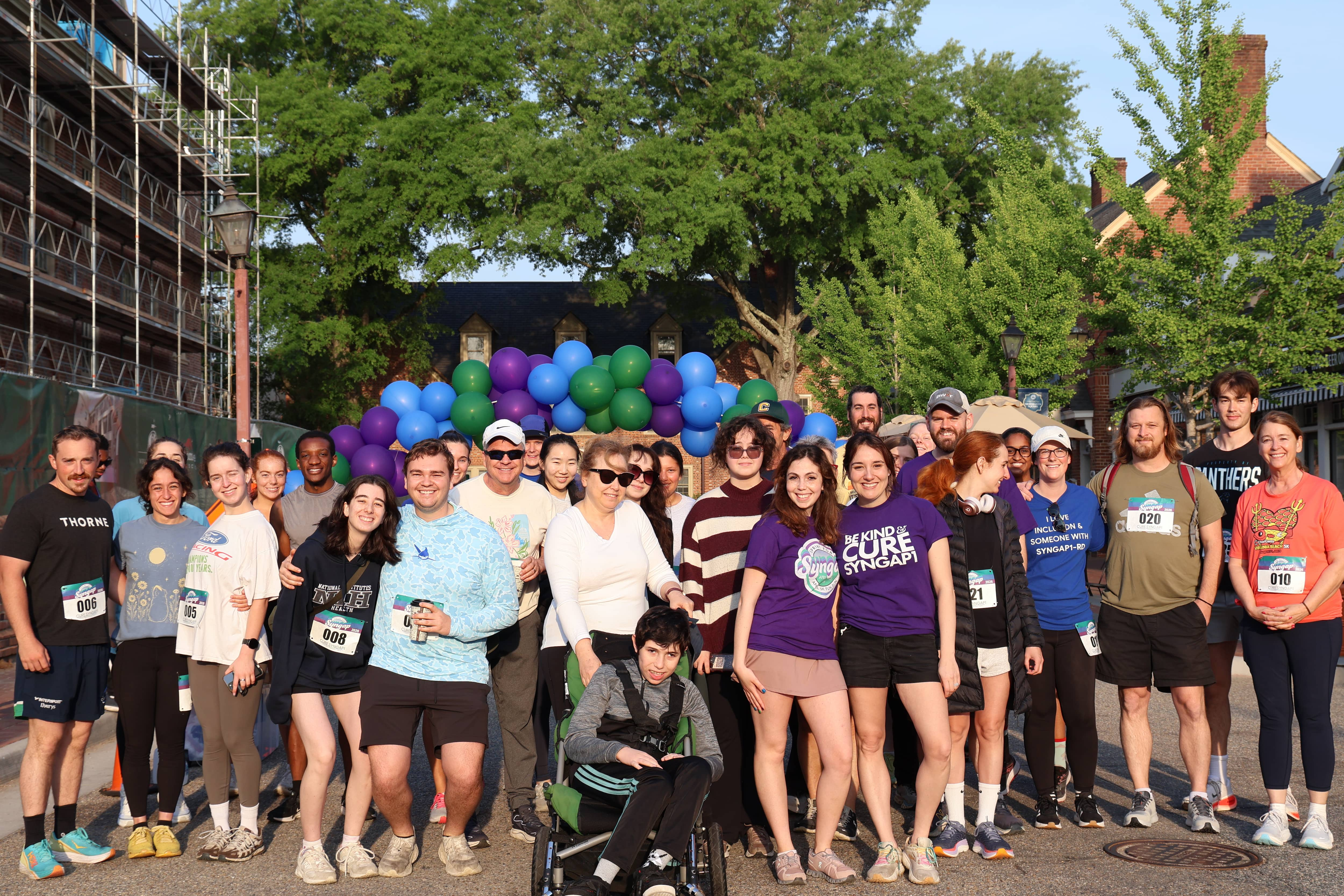 For Sakly, the research extends beyond the laboratory. Her personal connection to SYNGAP1-related disorders has motivated her involvement with the broader community of families, researchers and advocates working to advance understanding of the condition.
She helps organize the Mora & Qusay 5K: Sprint4SYNGAP in Williamsburg, an event that raises awareness of SYNGAP1-related disorders and supports the nonprofit organization CURE SYNGAP1.
"It's kind of this great opportunity for us to just talk about the disorder and get families to hear about it," Sakly said.
The next event is scheduled for April 24, 2027 in Colonial Williamsburg.
Sakly has also shared preliminary findings at CURE SYNGAP1's annual research conference, where she has connected with scientists investigating the disorder from different perspectives. She plans to present again in December.
Those connections have provided opportunities to exchange ideas and strengthen her research.
Collaboration Across Disciplines
The research collaboration grew out of William & Mary's biomathematics interest group, which brings together faculty and students from multiple departments across three schools to explore problems at the intersection of mathematics and biology.
Conradi Smith and Bestman first connected through the group's Biomath Seminar, where presentations introduced them to each other's research and revealed opportunities to combine their expertise.
Their partnership now brings mathematical modeling and experimental biology together to address questions that neither approach could fully answer on its own, which Bestman hopes will encourage other scientists to follow their example.
“Biologists can benefit from a colleague with a mathematical, biophysical perspective,” said Bestman.
For Conradi Smith, the project reflects the importance of bringing researchers with different expertise together to address fundamental scientific challenges.
“If the purpose of mathematical biology is to solve problems in biology,” he said, “close collaboration between theorists and experimentalists is essential.”
What began as one undergraduate student's honors thesis has become an NSF-supported research effort that bridges academic discipline and creates new opportunities for discovery.
For Sakly, it is also an opportunity to continue pursuing the questions that first inspired her research, combining a personal motivation with the tools of mathematics and neuroscience to better understand how the brain works.
Editor’s Note: William & Mary is committed to preparing students for data-rich environments and an AI-driven world through thoughtful leadership and human-centered innovation. This vision is taking shape in the new School of Computing, Data Sciences & Physics (CDSP) in collaboration with the entire campus. CDSP integrates AI tools into daily work, including news writing. The CDSP communications team used OpenAI’s ChatGPT to assist in building this article. The team then reviewed and edited the article before publication.