
From Classroom to Cyber Range: W&M Students Take on Critical Infrastructure Threats
 Most people turn on a faucet without giving much thought to the complex systems that make clean drinking water possible. It is an essential service that is easy to take for granted, but a series of cyberattacks this summer reportedly targeting critical water infrastructure underscores how closely digital security is tied to the services communities depend on every day.
As attacks on water systems, power grids and other essential infrastructure become more frequent and sophisticated, more cybersecurity professionals are needed to prevent a digital intrusion from escalating into a crisis.
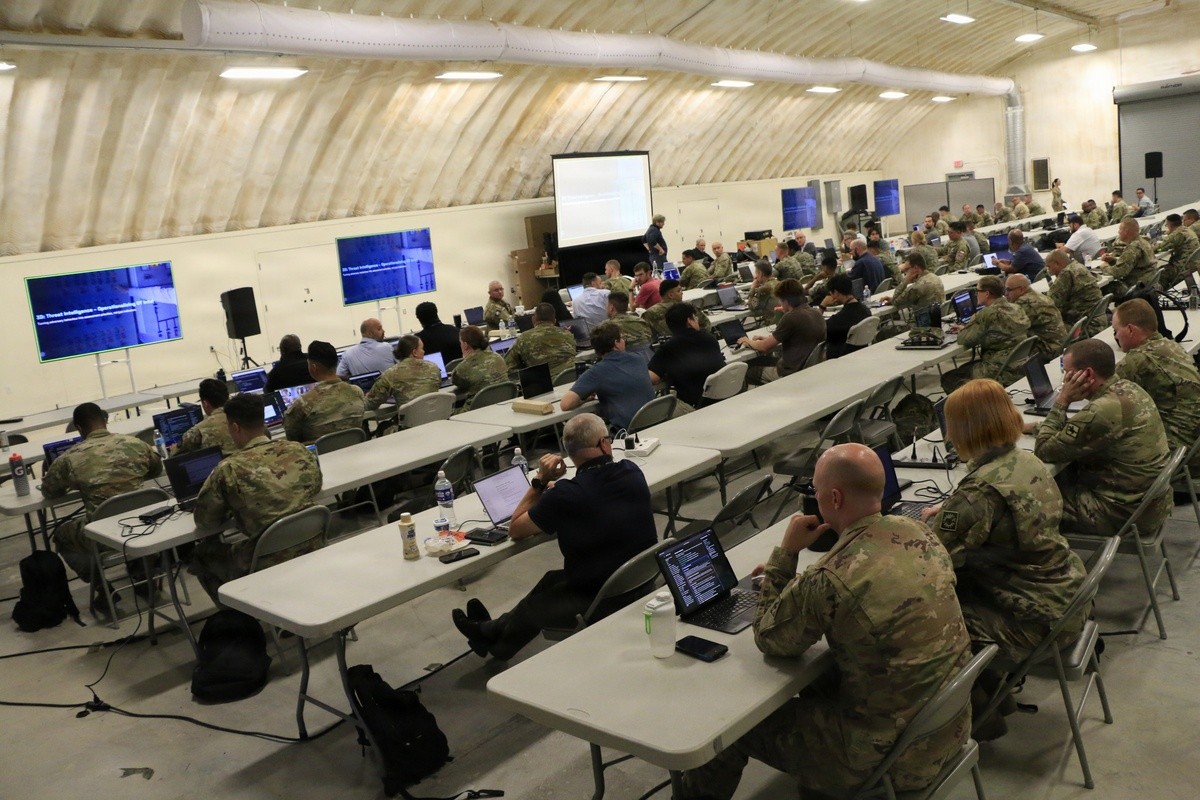
To help confront that challenge, seven William & Mary students gained hands-on cybersecurity experience this summer during Cyber Fortress 26, a two-week exercise hosted by the Virginia Army National Guard in Virginia Beach. The exercise brought together military personnel, government agencies, international partners and industry experts, placing the students in a training environment built around the tools and procedures used by cybersecurity professionals.
For Caleb Chambers ’27, a computer science major concentrating in cybersecurity, Cyber Fortress transformed lessons from the classroom into a realistic training environment.
“It was really interesting to see how well some of my coursework, especially within the concentration, applied to the work and training that we did there,” stated Chambers. “A lot of the things that I've done in my courses were directly transferable into that kind of like real world, hands-on experience.”
The exercise’s first week combined coursework and training on operational technology, the systems used to monitor and control physical equipment, with an individual capture-the-flag competition similar to those the students had previously competed in through the National Cyber League.
Levi Kunnas ‘27, who is also pursuing a cybersecurity concentration within computer science, placed 11th overall in the competition and received a military challenge coin for finishing in the top 20.
The experience was especially meaningful for Kunnas, a cadet in the William & Mary Army ROTC program who hopes to be commissioned as a cyber officer in the Army National Guard.
“Cyber Fortress was literally the perfect internship and environment for me to be in,” said Kunnas. “I was around cyber officers, the exact people I would hope to be working with, doing the exact things I would want to do after college, so having that great two-week experience of literally doing exactly what I'm looking for and exactly what I want to do after [graduation].”
The second week of the exercise featured a force-on-force exercise, with one team taking on the role of a malicious actor targeting a dam and another team working to protect the infrastructure from the attackers.
“I really loved it and it opened my eyes to maybe [wanting] to do this sort of thing as a career later on, so it was a great experience,” said Kunnas.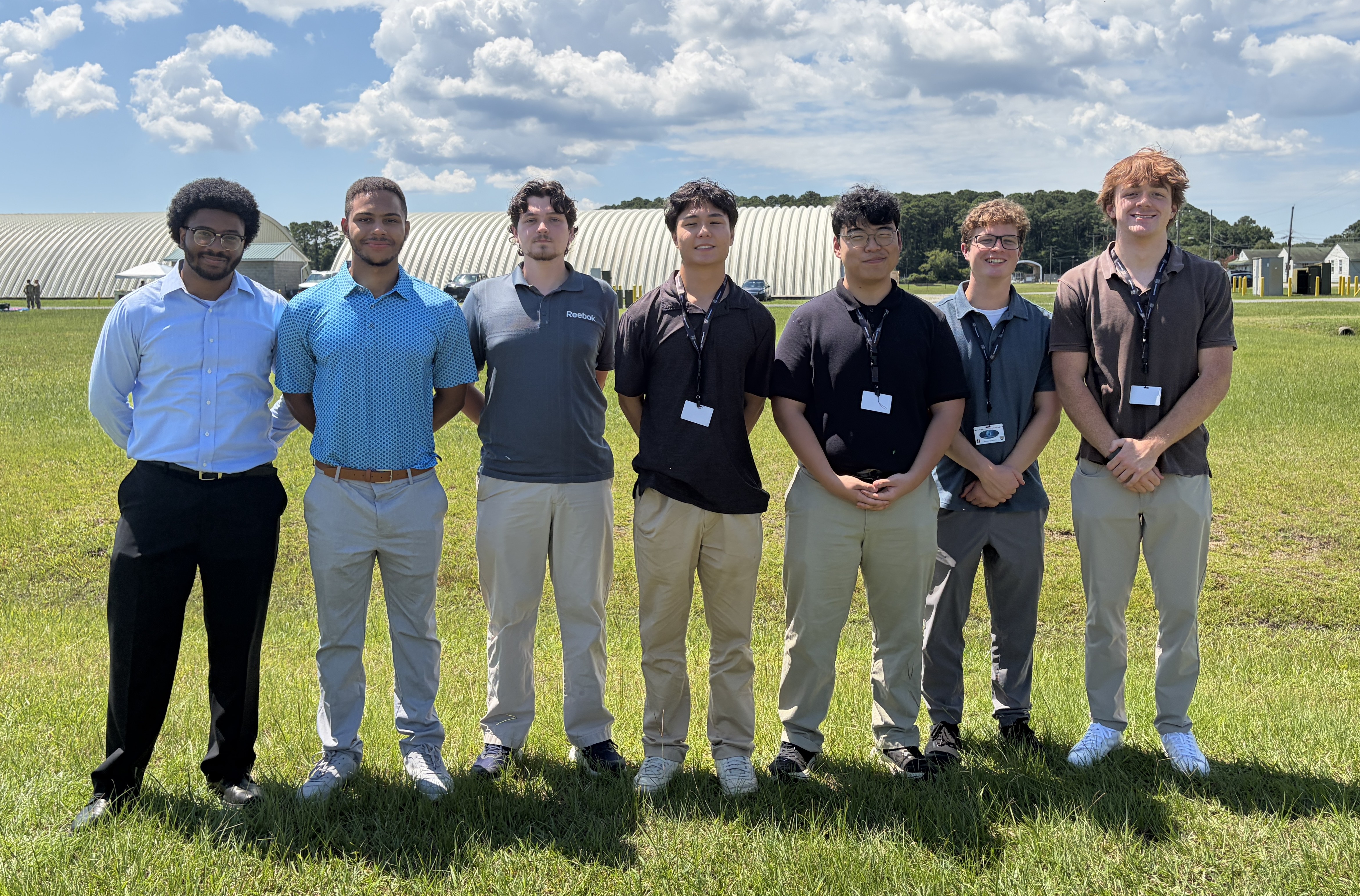
Power of Partnerships
This summer marked the second year William & Mary students participated in Cyber Fortress, an opportunity made possible through connections established by the William & Mary Military & Veteran Affairs (MILVET) team. Drawing on its relationships throughout Hampton Roads, MILVET connected the university with the Virginia National Guard and helped open the exercise to W&M students.
Participation was supported by W&M’s Whole of Government Center of Excellence (WGC), which connects students with experiential learning opportunities related to national security and public service. That support helped expand W&M’s participation in Cyber Fortress from three students last year to seven this year, with each student receiving a stipend through the WGC National Security Internship Program (NSIP) for the two-week micro-internship along with housing at the State Military Reservation in Virginia Beach.
The exercise also gave students opportunities to build relationships with representatives from state and federal agencies, the military, industry, and international partners from Finland and Estonia. While Kunnas focused on making contacts that could support his goal of commissioning as a cyber officer, Chambers connected with a National Guard soldier who, in his civilian career, helps organize DEF CON, one of the world’s largest cybersecurity conferences.
Meeting a National Need
The challenge at the center of Cyber Fortress extends beyond a training range. Water, energy and other essential infrastructure increasingly rely on connected technology, creating opportunities for cyberattacks to disrupt the physical systems communities rely on every day.
The School for Computing, Data Sciences & Physics is helping prepare students and communities to meet that growing threat through an expanding combination of education, research and experiential learning.
Beginning this fall, students across disciplines can pursue a new minor in cybersecurity, gaining the knowledge and practical skills needed to recognize and respond to cyber threats. W&M researchers are also developing a new approach for predicting, understanding and preparing for cyberattacks on water infrastructure, with the team planning to join Cyber Fortress next year.
Together these efforts pair classroom learning and research with opportunities for students to work alongside those responsible for defending the nation’s critical infrastructure, an opportunity Kunnas hopes is offered to more students in the future.
“This is such a great experience and I think more people should get the opportunity to see and learn in this kind of unique environment that, you know, students really don't get a chance to otherwise,” stated Kunnas.
Editor’s Note: William & Mary is committed to preparing students for data-rich environments and an AI-driven world through thoughtful leadership and human-centered innovation. This vision is taking shape in the new School of Computing, Data Sciences & Physics (CDSP) in collaboration with the entire campus. CDSP integrates AI tools into daily work, including news writing. The CDSP communications team used OpenAI’s ChatGPT to assist in building this article. The team then reviewed and edited the article before publication.