
Beyond One-Size-Fits-All: BaMM Lab Engineering the Future of Medical Implants
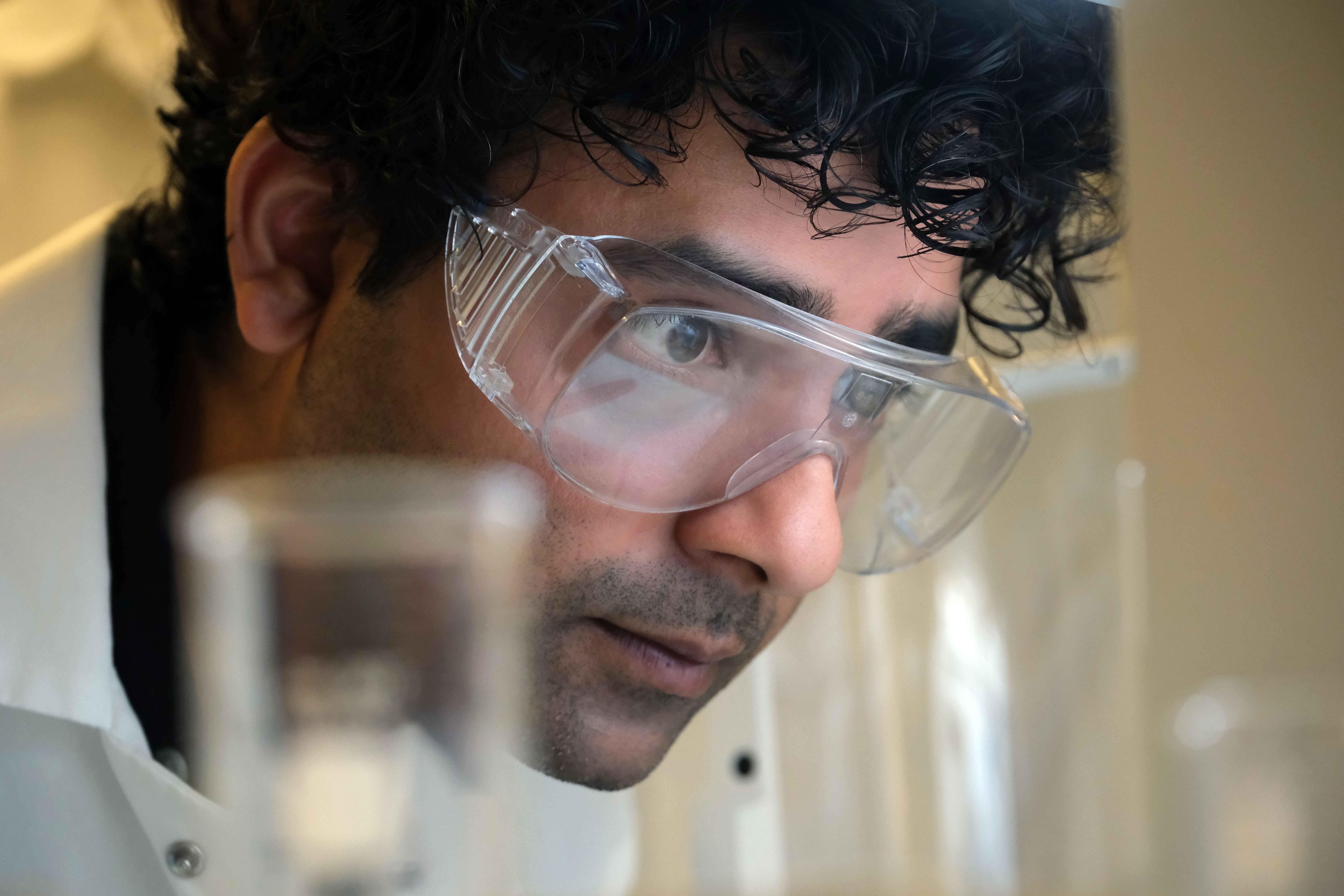
While broken bones and joint damage are among the most common and painful medical conditions people face, healing them isn't always straightforward. Severe injuries often require advanced biomaterials – man-made implants or scaffolding designed to help the body regrow missing bone and tissue. For these treatments to work, the new material must integrate and work in tandem with the native biology of the injured tissue.
Traditionally, designing medical implants has focused primarily on structure, developing implants that restore support to the damaged area. While effective for stability, this approach has two major flaws.
First, they are passive, meaning they do not promote the body’s natural healing processes or complement the pathophysiology at the fracture site. Second, they rely on a one-size-fits-all model. The way a singular patient responds to a treatment is multifactorial, depending on their individual biology and pre-existing conditions.
This process gets incredibly complicated for patients managing multiple chronic health conditions at once. In older or less healthy populations, issues like brittle bone fractures and severe joint wear-and-tear completely change how the body heals.
Therapies, therefore, should be designed accordingly.
The Bio-Adaptable Musculoskeletal Materials (Ba.M.M.) Lab at William & Mary acknowledges that no two people have the same biology and that the next generation of biomedical materials should be more adaptable and tailored to a patient’s specific physiological needs.
Leading this work in the Ba.M.M. Lab is Indranath Mitra, an assistant professor in applied science. Mitra’s research focuses on how to develop more personalized regenerative therapies for those living with type 2 diabetes.
The alteration in the tissue microenvironment of a diabetic person not only influences how the body repairs tissue after an injury, but also how it responds to implanted materials. Because traditional, structure-based implants are passive, they struggle to communicate with this altered biological environment, leading to a 15% failure rate of implant integration with native tissue.
To tackle these challenges, Mitra and the graduate and undergraduate students in his lab are using a more holistic approach. Rather than treating Type 2 diabetes and bone injuries as separate medical issues, the team is studying them in tandem to discover new ways to design implants that can successfully heal compromised tissue.
Intersection of Menopause, Diabetes, and Joint Health
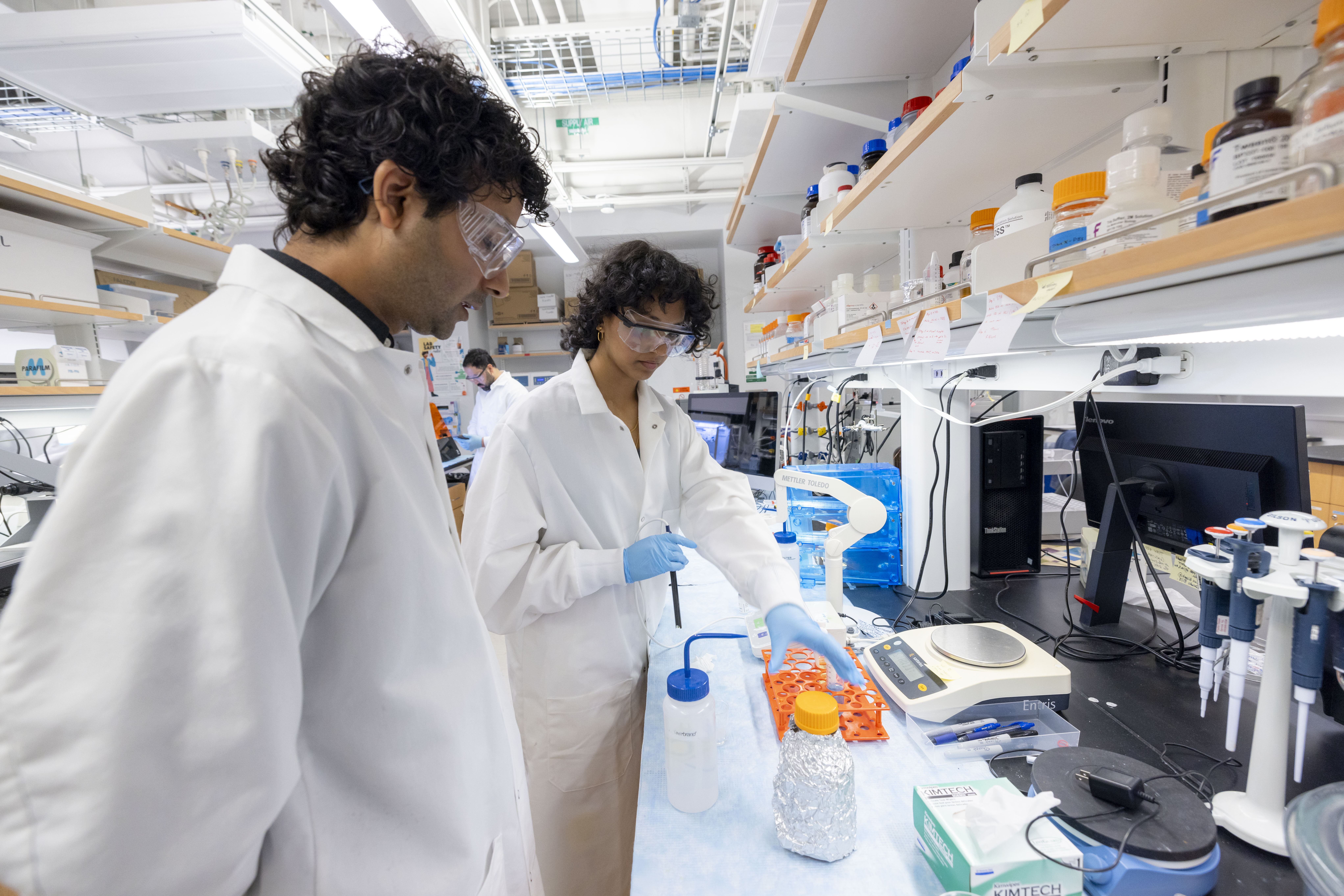 As women enter menopause, a decrease in estrogen makes them more susceptible to both type 2 diabetes and osteoarthritis of the knee. While these conditions have been studied extensively in isolation through higher-level association studies, there is a gap in understanding how these three conditions interact and the effect on skeletal tissue repair.
Ananya Gomatam ’27, a neuroscience major, will be working to address the unmet clinical needs of this specific intersectional population, for her honors project this upcoming academic year.
Ananya will use a mouse model to mimic these three conditions in tandem, with osteoarthritis being induced by destabilizing the meniscus. She will then evaluate how combination therapies of local and systemic drugs impact the restoration of cartilage integrity and prevent further degeneration.
“Consider that a diabetic patient will always be on some sort of systemic drug, like GLP-1 or Metformin, for example,” Mitra explains. “We need to consider how this could interfere with the local healing biology of the skeletal tissue, which influences how we design the therapeutic.”
Vessel-on-a-Chip
A key limitation of traditional in vitro laboratory models is how they simulate high-sugar environments. Typically, researchers testing how diabetes affect cell growth simply introduce glucose directly into a petri dish. Mitra argues that this approach misses the mark because it doesn't reflect how the human body functions.
In the body, glucose is delivered to cells by the blood. The glucose must first diffuse through the capillary basement membranes and the extracellular matrix of the bone before it reaches the proliferating cells. As a result, glucose exposure occurs gradually over time, rather than as the abrupt concentration spike utilized in many in vitro models.
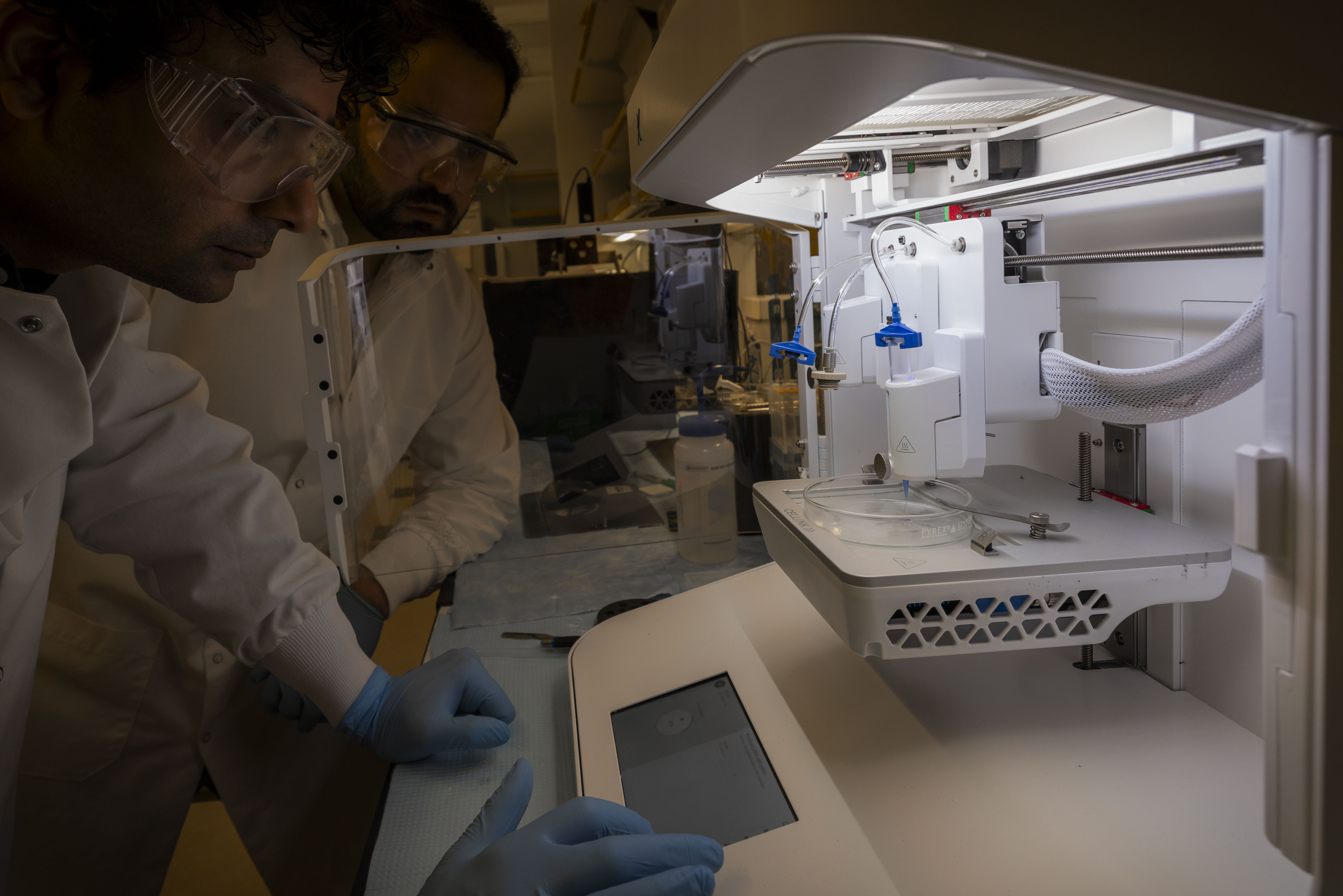
To bridge this gap, Josh Levin ’26, a recent engineering physics graduate, engineered a “vessel-on-a-chip” microfluidic device to more accurately model a diabetic microenvironment. His model utilizes a hydrogel barrier and greyscale printing to mimic the spatially heterogeneous nature of capillary basement membranes. Glucose is then allowed to flow through a serpentine channel and diffuse through the barrier in a more physiologically representative context before it reaches bone cells.
In addition to being more physiologically representative, this model is advantageous because it is fast, highly efficient, and potentially reduces the need for animal testing in future studies.
Waking Up Dormant Cells
Chronic high blood sugar from Type 2 diabetes can essentially force developing bone cells into a state of hibernation. When these cells fall dormant, the body's natural ability to heal after a major bone injury completely stalls, making the cells highly resistant to traditional bone-growing drugs and advanced healing therapies.
To break through this biological roadblock, Mitra and another recent graduate from his lab, Namitchandra Nallapaneni, explored an alternative for regrowing damaged cartilage: secretomes.
A secretome is the complete set of molecules a cell secretes into its surrounding environment, including proteins, lipids, and extracellular vesicles. It has been shown that secretomes from endothelial cells, the cells that line our blood vessels, promote skin wound healing in type 2 diabetics. Another type of immune cell, M2 macrophages, release secretomes that can reduce cartilage degeneration.
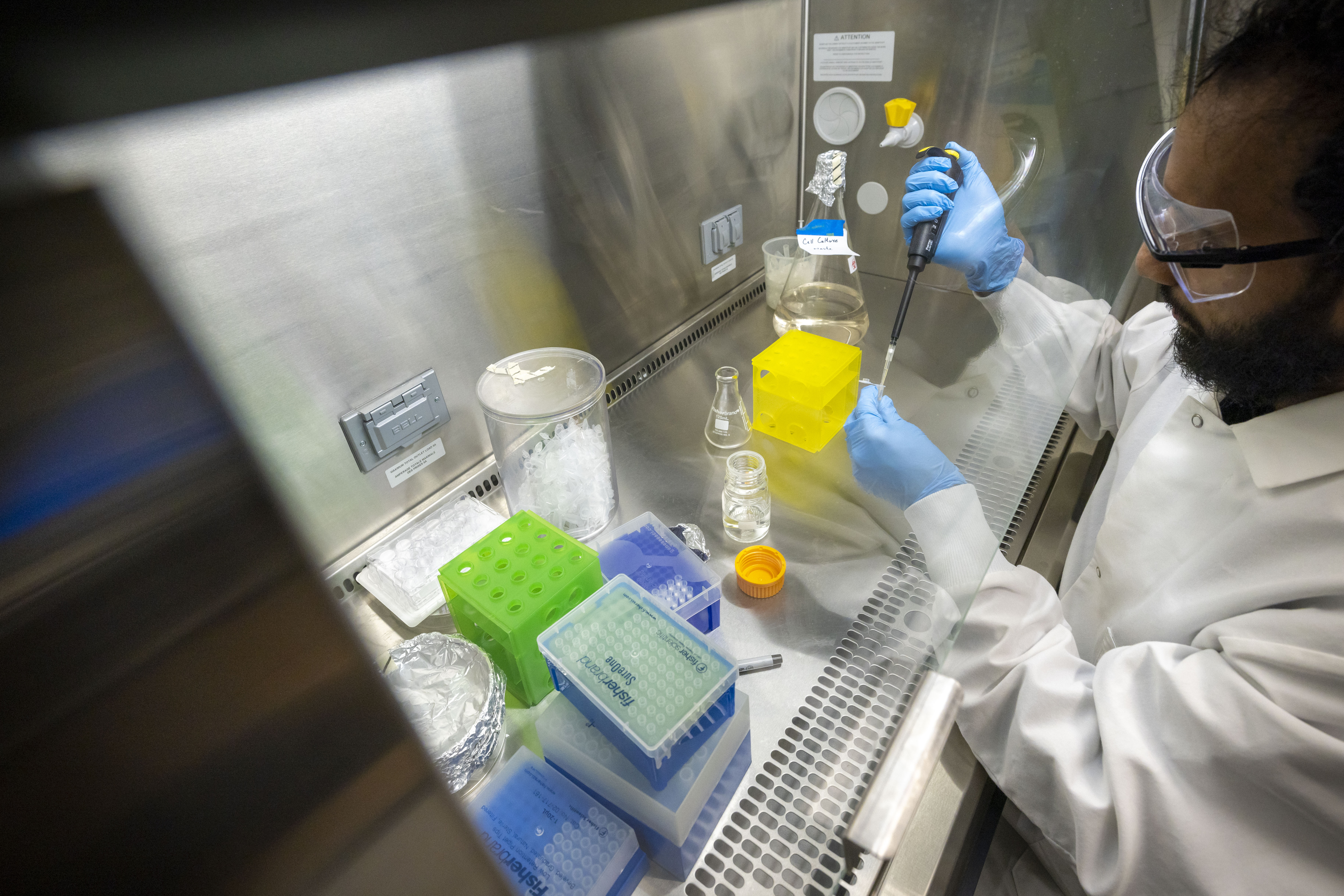 Nallapaneni’s project combined these two ideas, investigating whether a cocktail of these secretomes promote cartilage repair in type 2 diabetics. So far, he has treated stem cells with endothelial and M2 macrophage secretomes in isolation, with the preliminary data suggesting that the endothelial secretome promotes stem cell survivability. Interestingly, the cells treated with M2 macrophage secretome show differentiation patterns consistent with pre-osteoblasts (bone) rather than chondrocytes (cartilage).
Because cells often behave differently when they receive multiple signals at once, Nallapaneni's next step is to test both secretome packages in tandem. He will put these cells to the ultimate test by placing them inside the realistic diabetic environment created by Josh Levin’s "vessel-on-a-chip", allowing the team to watch exactly how the treated cells survive, grow, and adapt.
“Translationally, these secretome-primed stem cells could be integrated into a hydrogel matrix, which could then be inserted into the intervertebral region of a diabetic patient with degenerating disks. The hydrogel matrix would act as structural support, while the primed cells would act as an active therapeutic to promote cartilage regeneration,” Mitra said.
Rewriting the Roadmap for Modern Healthcare
Mitra and students in the Ba.M.M. Lab continue to research ways to make biomedical materials more adaptable. Their next project involves blending advanced 3D bioprinting with cellular biology to engineer smart, personalized medical scaffolds that can override biological roadblocks to jumpstart natural bone and tissue healing.
Through student-led innovation, the Ba.M.M. Lab seeks to rewrite the roadmap for personalized medicine.
“In diabetic patients, there is an added layer of complexity, so the one-size-fits-all approach is not ideal,” said Mitra. “We must address the unique biology of the patient to ensure the best possible outcome.”